Aluminum Pergola vs Wood and Steel: Why Aluminum Wins in the UAE Climate
A practical material comparison for anyone deciding what their next pergola should actually be built from.
Choosing a pergola material is one of those decisions that feels purely aesthetic until you have lived with the result for a couple of UAE summers. Wood looks beautiful in a showroom photo. Steel looks substantial and architectural. But once intense heat, UV exposure, and the occasional sandstorm enter the picture, the material you choose has a much bigger effect on how the structure performs, how much maintenance it demands, and how long it actually lasts than most first-time buyers expect.
This guide compares aluminum, wood, and steel pergola construction specifically for the UAE climate, and explains why aluminum pergola installation has become the dominant choice across the region for anyone who wants a structure that genuinely performs over its full design life rather than just for the first year or two.
Wood: Beautiful at First, Demanding Afterward
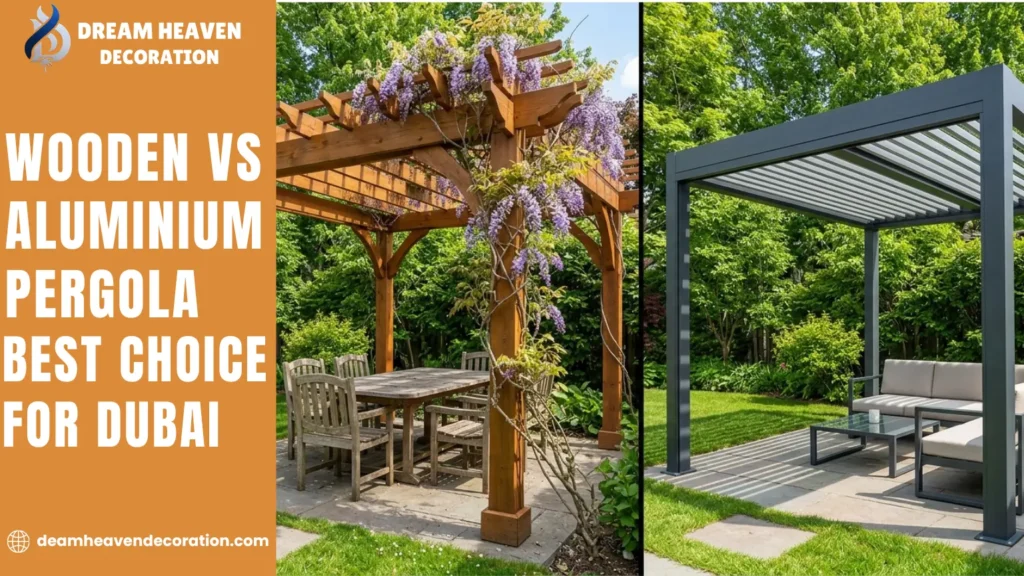
Timber pergolas have a warmth and natural texture that aluminum and steel genuinely cannot replicate, and for some architectural styles — particularly Mediterranean or rustic-themed gardens — wood remains a popular aesthetic choice. The challenge in the UAE is that wood is a living material that responds constantly to heat, humidity swings, and direct UV exposure. Over a single summer, timber can dry out, crack, and warp; without consistent re-sealing and staining on a strict annual schedule, the wood begins to silver, splinter, and eventually weaken structurally within just a handful of years.
Termites and wood-boring insects are a further consideration in the UAE, and while less common than in more humid climates, they are far from unheard of, especially in properties near landscaped or irrigated gardens. The realistic ownership experience of a timber pergola in the UAE is an attractive structure for the first two or three years, followed by an ongoing and gradually increasing maintenance burden if the owner wants to keep it looking and performing the way it did on day one.
Steel: Strong, but Heavy and Prone to Corrosion
Steel pergolas offer genuine structural strength and can achieve longer clear spans with thinner profiles than either wood or aluminum, which is why steel remains popular for larger commercial structures and architecturally ambitious designs. The trade-off is weight — steel structures require more substantial foundations and are considerably harder to modify or relocate once installed — and corrosion vulnerability. Even with a quality galvanised coating, steel that is scratched or chipped during installation or daily use exposes the raw metal underneath, and the UAE’s combination of heat and, in coastal areas, salt air accelerates rust formation at any exposed point far faster than it would in a temperate climate.
Steel also absorbs and radiates heat noticeably more than aluminum, meaning a steel pergola frame can become genuinely too hot to touch comfortably during peak summer afternoons — a practical issue when posts and beams sit at head height or within easy reach of anyone using the space.

Aluminum: Built for Exactly This Climate
Aluminum addresses nearly every weakness of the other two materials simultaneously. It does not rust the way steel does — instead, it forms a thin, stable oxide layer that actually protects the metal beneath rather than progressively eating into it. It is roughly a third of the weight of steel for a comparable structural profile, which means lighter foundations, easier installation, and less stress transferred to fixing points over years of thermal expansion and contraction. And unlike timber, it requires essentially no ongoing maintenance beyond an occasional rinse — no annual sealing, no staining, no risk of insect damage.
A quality powder-coated finish on aluminum, applied at the correct thickness, holds its colour and protective qualities for many years even under constant UAE sun exposure, and unlike a chipped steel coating, a scratched aluminum surface does not set off a rapid corrosion process — it simply exposes a small area of the same naturally protective oxide layer. This forgiving quality matters in real-world conditions where structures inevitably pick up the occasional scuff or impact over a long service life.
Aluminum is also the material that makes motorised louvre roof systems practical, since the moving louvre blades need to be light enough for the motor to operate smoothly and reliably over tens of thousands of open-close cycles across the structure’s lifespan. This is one of the reasons nearly every quality louvre system on the market, regardless of brand, is built on an aluminum frame rather than steel or timber.
Cost Over Time, Not Just Upfront Price
A direct upfront price comparison can be misleading, since basic timber pergolas are often the cheapest option to purchase initially. The more useful comparison is total cost over a fifteen-year ownership period, factoring in materials, maintenance labour, and any necessary repairs or full replacement along the way. On this basis, aluminum consistently comes out ahead of timber, which typically needs significant refinishing every one to two years and full replacement of degraded sections within five to eight years in UAE conditions. Aluminum’s higher initial cost compared to basic steel is also frequently offset within a few years once steel’s repainting and anti-corrosion maintenance costs are factored in.
When Wood or Steel Might Still Make Sense
There are still specific situations where wood or steel may be the right call. A property owner who genuinely wants the natural aesthetic of timber and is prepared to commit to a strict annual maintenance routine can achieve a beautiful result, particularly with hardwood species more naturally resistant to UAE conditions. Steel remains the better engineering choice for very large architectural spans where its strength-to-weight ratio at scale outperforms aluminum, such as some large commercial or hospitality canopy projects. For the overwhelming majority of residential pergola, car parking shade, and garden structure applications across the UAE, however, aluminum delivers the best balance of appearance, performance, and long-term value.
🔩 Considering an Aluminum Pergola?
Modern Shade designs and installs aluminum pergolas across the UAE, including flat roof, gable, and motorised louvre roof designs. Free site visit and material consultation. Call +971 50 852 0085.