Ramadan and Religious Event Shade Structures: Planning Tents and Canopies for UAE Mosques and Gatherings
How mosques, community organisers, and event planners across the UAE prepare outdoor shade and tent structures for Ramadan, Eid, and other large religious gatherings.
Across the UAE, certain times of year bring outdoor gatherings on a scale that permanent infrastructure alone cannot comfortably accommodate. Ramadan iftar and suhoor gatherings, Eid prayer congregations, and other significant religious occasions regularly draw worshippers and community members in numbers that exceed what any mosque’s indoor prayer hall or permanent forecourt shading can hold comfortably. Planning for these events properly — with the right combination of permanent shade infrastructure and temporary tent structures — is essential to making sure the experience is dignified, comfortable, and safe for everyone who attends.
This guide is written for mosque committees, community organisers, and event planners across the UAE who are responsible for ensuring outdoor spaces are properly shaded and protected during Ramadan, Eid, and other large religious gatherings. It covers the difference between permanent and temporary shade solutions, what to consider when planning for the specific demands of religious gatherings, and how to work with a tent installation specialist in the UAE to ensure your event infrastructure is ready well ahead of time.
Why Religious Gatherings Need a Different Approach to Shade Planning
Standard commercial or residential shade planning assumes relatively predictable, steady usage patterns. Religious gatherings during Ramadan and Eid present an entirely different challenge: attendance can fluctuate enormously from one evening to the next, the largest numbers often arrive with little advance warning, and the activities involved — communal prayer requiring people to stand, bow, and prostrate in close formation, or large-scale communal dining for iftar — place specific physical demands on the space that a generic outdoor canopy was not necessarily designed around.
During Ramadan in particular, the timing of peak outdoor usage shifts to the hours immediately before and after sunset, when large numbers of worshippers and community members arrive for Maghrib prayer and iftar, often staying through Isha and Taraweeh prayers later in the evening. This creates a sustained, multi-hour period of high occupancy in outdoor and semi-outdoor spaces that needs reliable shade, adequate lighting once darkness falls, and good ventilation given the density of people gathered. Eid prayers present a different but equally demanding scenario: an extremely high concentration of worshippers attending a single, time-specific outdoor prayer, often in the early morning when temperatures are more bearable but space constraints are at their most acute.
Permanent Shade as the Foundation
A well-planned mosque or community space approaches shade as a layered system rather than relying entirely on temporary structures erected once a year. Permanent tensile sun shade structures covering the main forecourt and regularly used outdoor prayer areas provide year-round protection for daily prayers and smaller gatherings, while also forming the core infrastructure that temporary tent structures can extend during peak periods like Ramadan and Eid. This layered approach is significantly more cost-effective over time than relying purely on temporary tent rental every single year, and it ensures that the mosque’s outdoor space is properly protected for the other eleven months as well.
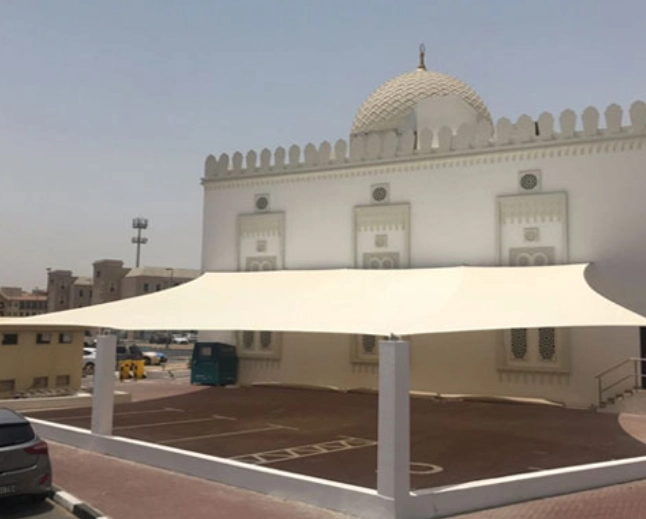
When planning permanent shade for a mosque forecourt, the design needs to account for the specific movement patterns of communal prayer — clear sightlines toward the qibla direction, unobstructed space for the full range of prayer movements, and structural support columns positioned at the edges of the prayer area rather than within it. Tensile membrane structures in white or cream tones that complement the mosque’s existing architecture are frequently the preferred solution, both for their practical shade performance and for the way their flowing forms respect the building’s character rather than competing with it visually.
Temporary Tents for Peak Demand
Even the best-designed permanent shade infrastructure rarely covers the full capacity needed during Ramadan and Eid, when attendance can multiply many times over compared to a typical day. This is where temporary tent installation becomes essential. Modern event tents used for religious gatherings in the UAE have moved well beyond simple canvas marquees. Today’s clear-span aluminium-framed tent systems can enclose large areas without internal support columns, preserving the open sightlines that communal prayer requires while still providing complete protection from sun and, where needed, rain.
For iftar gatherings specifically, tent structures need to accommodate long communal dining arrangements, which typically means wider clear spans than a standard prayer tent and careful planning around the placement of food service points, washing stations, and seating to maintain orderly flow as large numbers of people arrive within a narrow window before sunset. Many mosques and community organisations now invest in climate-controlled tent structures with integrated cooling for Ramadan periods that fall during the hotter months of the UAE calendar, recognising that worshipper and guest comfort directly affects the quality and dignity of the gathering.
Lighting and Evening Comfort
Because so much of Ramadan’s outdoor activity happens after sunset, lighting is just as important as shade itself. Both permanent tensile structures and temporary tents should be specified with integrated lighting that provides clear, even illumination across the prayer and gathering areas without creating glare or harsh shadows. For permanent structures, recessed or integrated LED lighting built into the membrane support framework gives a clean, professional appearance and reliable performance year after year. For temporary tents, modern rental and installation packages typically include comprehensive lighting rigs as standard, but it is worth confirming the specific lighting plan well in advance rather than assuming generic coverage will be adequate for the size of gathering expected.
Planning Timeline: When to Start Preparing
One of the most common planning mistakes mosque committees and event organisers make is leaving tent and shade arrangements until the final weeks before Ramadan or Eid. Demand for quality tent installation services across the UAE rises sharply in the weeks leading up to these periods, and the best installers, the most reliable equipment, and the most experienced teams are booked well in advance by organisations that plan ahead. Starting the conversation with a tent and shade supplier at least two to three months before Ramadan gives enough time to properly assess the space, agree on the right tent configuration and capacity, and schedule installation without the pressure of a compressed timeline.
If your mosque or community space does not yet have any permanent shade infrastructure and you are considering an investment in this area, the ideal time to plan and install is well outside of Ramadan itself — giving the structure time to be properly commissioned, tested, and integrated into the site before the period of peak demand arrives. A permanent tensile shade structure installed in the months before Ramadan means your mosque enters the holy month with reliable, tested infrastructure already in place, with temporary tents simply extending capacity for the peak days rather than providing the entire solution from scratch.
Choosing a Supplier with Religious Gathering Experience
Not every shade and tent supplier in the UAE has genuine experience with the specific requirements of mosque and religious gathering projects. When evaluating suppliers, ask specifically about previous mosque or community centre projects they have completed, how they approach the layout and sightline requirements for communal prayer spaces, and what their capacity is for rapid response if attendance during Ramadan exceeds initial projections on any given evening. A supplier with genuine experience in this specific area will ask thoughtful questions about your expected attendance patterns, prayer space requirements, and timing constraints rather than simply offering a generic event tent package.
It is also worth asking about the supplier’s availability for support during the actual Ramadan or Eid period itself, not just for the initial installation. Tents and shade structures occasionally need adjustment, additional capacity, or minor repairs during a multi-week period of intensive use, and a supplier who can respond quickly if something needs attention during the holy month itself provides genuine peace of mind for the organising committee.
🕌 Planning Ahead for Ramadan or Eid?
Modern Shade supports mosques, community organisations, and event planners across the UAE with both permanent tensile sun shade structures and professional tent installation for Ramadan, Eid, and other large gatherings. We recommend starting the conversation at least two to three months ahead of the holy month. Call +971 50 852 0085 to discuss your project.