
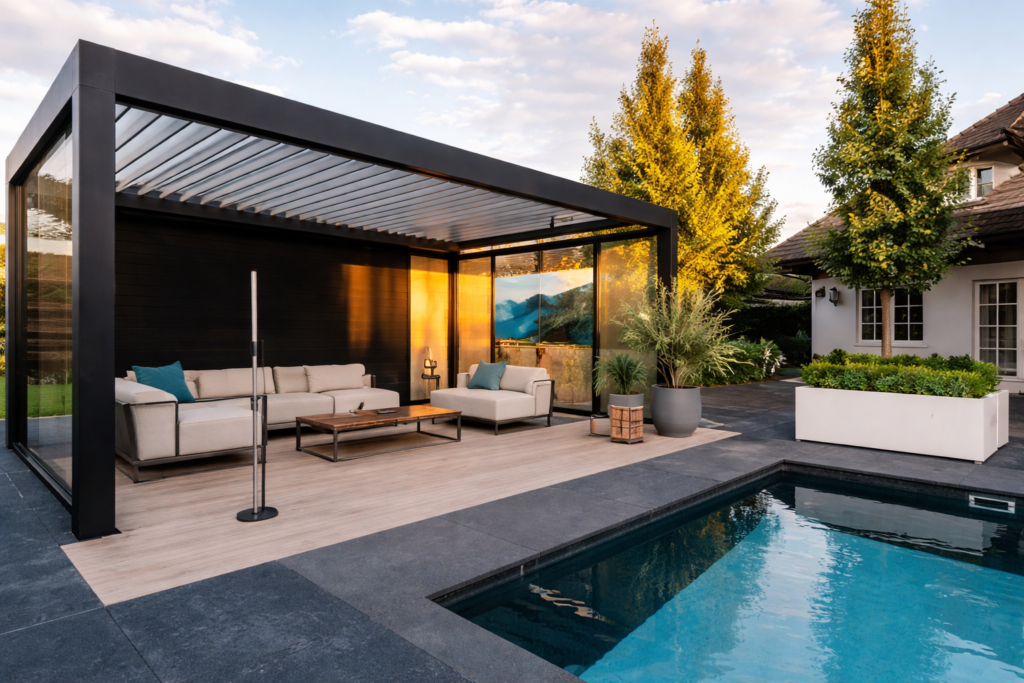
Rooftop pergola installations are among the most technically demanding outdoor structure projects in Dubai, and also among the most rewarding when done correctly. A rooftop terrace or upper-level balcony that is currently too hot and too exposed to use comfortably can be transformed into one of the most spectacular outdoor spaces a Dubai property has to offer — with panoramic city views, cool evening breezes, and a shaded outdoor environment that works across all seasons. But getting a rooftop pergola installation right in Dubai requires understanding a set of technical and design considerations that simply do not apply to ground-level installations. Here is a thorough guide to everything involved.
Why Rooftops Are Both the Most Rewarding and Most Challenging Location
The appeal of a rooftop outdoor space in Dubai is obvious. Elevated above the surrounding garden walls and neighbouring properties, a rooftop terrace offers views, privacy, and a sense of openness that a ground-level garden simply cannot replicate. In the evening, with a quality pergola providing comfortable shade and integrated lighting creating ambience, a rooftop terrace becomes one of the most spectacular outdoor living spaces a Dubai villa or apartment building can offer.
But the rooftop environment also amplifies the challenges of Dubai’s outdoor conditions. Wind speeds at rooftop level are typically higher than at ground level, meaning wind uplift forces on the pergola structure are greater and the structural fixing requirements are more demanding. UV exposure is slightly higher on a rooftop than in a sheltered garden. And there is the critical issue of the existing waterproofing membrane on the roof slab — any structure fixed to a roof must interface with that membrane without compromising its integrity, or water ingress to the building below becomes a serious risk. Our experienced pergola work in Dubai team has completed numerous rooftop installations across villas, apartments, and commercial buildings and understands these specific requirements thoroughly.
Structural and Engineering Considerations for Rooftop Pergolas
The structural engineering requirements for a rooftop pergola installation are meaningfully more involved than for a ground-level structure. The key considerations are as follows. Wind loading: at rooftop level in Dubai, wind speeds during Shamal events can be significantly higher than at ground level, and the pergola structure must be designed with appropriate safety factors for wind uplift and lateral loading specific to the roof elevation. Roof slab capacity: the roof slab has a finite structural capacity, and the concentrated loads from pergola post bases must not exceed the slab’s load-bearing capability at those specific points. If post loads need to be distributed, load-spreading plates or a secondary structural system may be required. Waterproofing interface: this is the most common source of problems in rooftop pergola installations. Every post base fixing that penetrates the roof membrane creates a potential water ingress point if not correctly detailed and sealed. Our pergola installation team in Dubai uses specifically designed rooftop base systems that interface with the waterproofing membrane without penetrating it, using compression and clamping details that maintain membrane integrity.
The Best Pergola Systems for Rooftop Installations in Dubai
For rooftop pergola installations in Dubai, the material and system choice is relatively straightforward. Aluminium is by far the most appropriate material for rooftop use. Its light weight relative to its structural strength reduces the load imposed on the roof slab compared with timber or steel alternatives. Its complete rust-resistance means it performs without degradation in the higher UV and moisture exposure environment of an elevated rooftop location. And its ability to be powder-coated in any colour allows the structure to be specified to match the building’s aesthetic or to complement panoramic views without visual clutter.
Motorized bioclimatic louvered systems are particularly well suited to rooftop locations in Dubai. The ability to open the louvres on cool evenings for a completely open-sky experience, and to close them quickly during the gusty conditions that often accompany Shamal wind events, makes the motorized system a natural fit for a rooftop setting where weather conditions can change more rapidly than at ground level. Our aluminium pergola installation service covers the full range of motorized systems for rooftop applications.
Drainage and Waterproofing Management
Drainage management is a critical design consideration for rooftop pergola installations that is sometimes overlooked by less experienced installers. A solid-roof or closed-louvre pergola on a rooftop collects rainfall that must be properly managed and directed away from the terrace surface. Without integrated gutters and properly designed drainage outlets, rainwater can pool on the roof, find its way into existing drainage channels, or create drainage conflicts with the building’s existing roof drainage system.
Our rooftop pergola designs always include integrated aluminium gutter channels that collect rainwater from the roof and direct it to designated downpipes and existing roof drainage points. This keeps the terrace dry during rain events and eliminates the risk of uncontrolled water accumulation on the roof surface. For outdoor pergola installations on rooftops, this level of drainage detailing is not optional — it is a fundamental part of a responsible installation.
Designing a Rooftop Pergola for Dubai’s Views and Wind
The design of a rooftop pergola should respond to the specific opportunities and constraints of the elevated location. Views are a primary asset of any rooftop terrace, and the pergola design should frame and enhance them rather than obstruct them. Column positions should be considered in relation to the key view lines from principal seating positions. The height of the structure relative to the parapet wall should be designed to maintain views while providing adequate shelter from wind. Side screens, if used, should be positioned on aspects where wind protection is needed rather than applied uniformly in a way that closes off valuable views.
Wind screening is an important design consideration on exposed rooftop terraces. Transparent polycarbonate or glass screens can provide wind protection while maintaining visual openness. Motorized zip screens on wind-exposed aspects allow the terrace to be opened fully on calm evenings and screened quickly when conditions change. Our pergola builders across the UAE design rooftop structures with all of these considerations integrated from the outset.
Getting Your Rooftop Pergola Right
A rooftop pergola installation in Dubai is a project that genuinely rewards working with an experienced, technically capable installer. The structural, waterproofing, drainage, and wind performance requirements are all more demanding than for a ground-level installation, and the consequences of getting any of them wrong — structural movement, water ingress, or wind damage — are more serious on a rooftop than in a garden. Modern Shade has the technical experience, the trained installation teams, and the track record of completed rooftop projects to give you the confidence that your installation will be done correctly. Contact us today for a free site visit and consultation anywhere in Dubai. Visit our pergola suppliers Dubai page for more information about our full service range.